 MACH//BREAK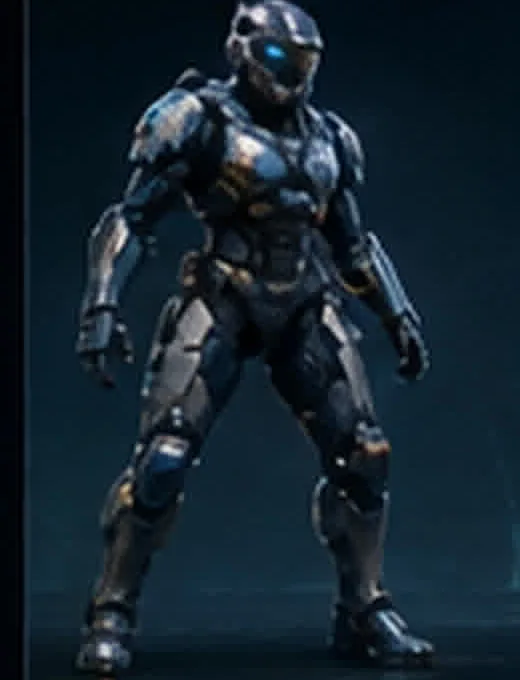
Concept
Strider
Light. Runner and scout. Fastest on the Breakline, first to the Core, first to know where the enemy is. Needs escort, sensor cover and route timing to survive the trip home.
Speed · capture · recon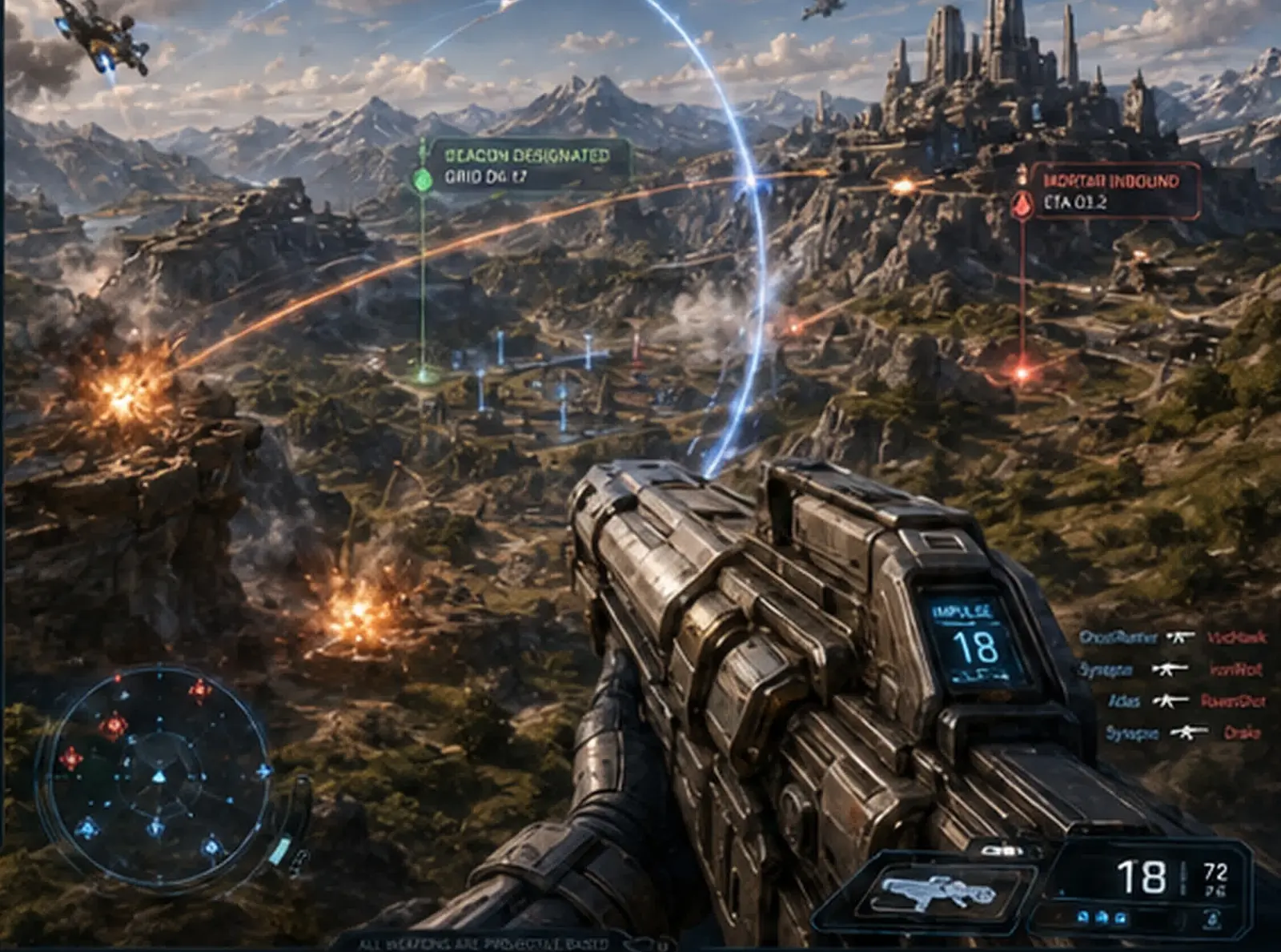
The game · Concept board
MACHBREAK is built from the physics up: mass, velocity, gravity, ground friction, jet thrust and an energy budget. Everything else sits on top of that. On this page: movement, energy, frames, weapons, mid-air hits, tactical depth.
Movement is the first weapon system, and it was the first milestone: if crossing an empty greybox map is not fun, nothing else gets built. Grounded velocity is projected onto the surface, so a downhill slope is an accelerator and the momentum you collect going down is kept going up the next ridge.
| Skill band | Velocity | Means |
|---|---|---|
| New player | 30–70 km/h | Move, fight, understand objectives. |
| Intermediate | 80–150 km/h | Chain slopes, spend jets wisely. |
| Advanced | 150–250 km/h | Run routes, intercept, survive at speed. |
| Elite | 250–400+ km/h | Invent routes, time attacks, create spectacle. |
Design targets. Speeds are measured in-engine and regression-tested; the numbers move as tuning does.
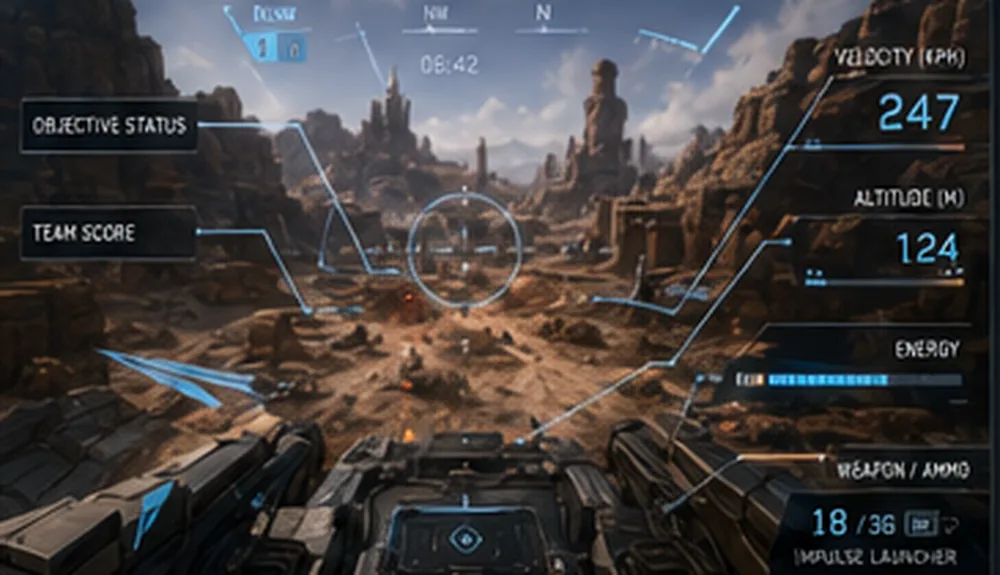
One pool, many customers. Burn drains it, shields drain it, the precision energy weapons drain it, and it recharges only while you are not spending. Arriving at the enemy base at 200 km/h on an empty tank is a choice you made three ridges ago.
That is the whole economy of a run: every jet is a spending decision, and the terrain is the only free acceleration on the map.
Slope momentum preservation is an acceptance test with a regression suite behind it: at least 85% of speed kept over 50 m on a 30° slope. The dev log records the measurements.
Three frames at launch. Nobody is locked into a role; the frame sets your mass, energy and carry limits, the loadout does the rest. Loadout slots: primary, secondary, sidearm, utility, pack, grenade, armour module, movement module.
Concept
Light. Runner and scout. Fastest on the Breakline, first to the Core, first to know where the enemy is. Needs escort, sensor cover and route timing to survive the trip home.
Speed · capture · recon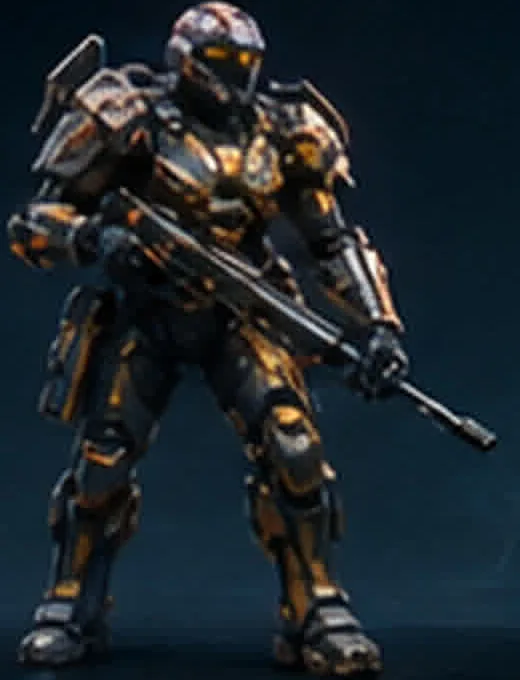
Concept
Medium. The generalist. Duels, escorts, holds the mid-field, bridges offence and defence. If you do not know what the team needs yet, take a Ranger.
Duel · escort · control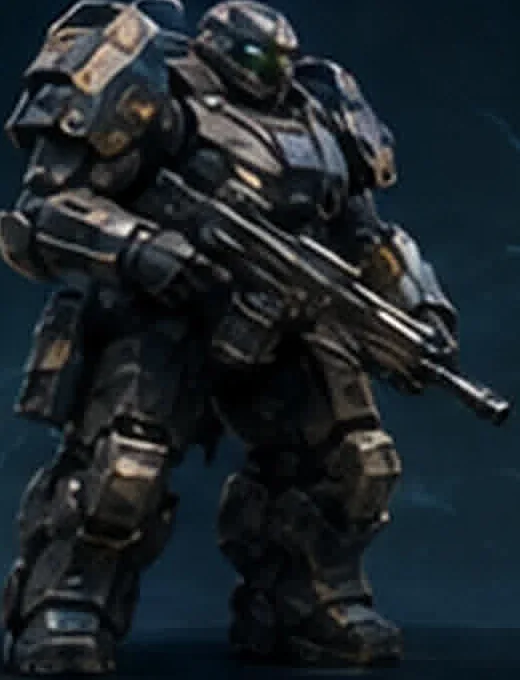
Concept
Heavy. Siege and base pressure. Carries the Gravity Mortar, anchors a push, holds a base. Slow on the flat, dangerous on a downhill, dependent on targeting data and protection.
Siege · anchor · pressureElectronic warfare and infiltration: cloak, beacons, jammers, false signals. Needs sensor windows and an extraction plan.
LaterRepair, turrets, deployables, vehicle sustain. Needs security and resource timing.
LaterSpecter and Engineer arrive after the core game; their tools show up first as packs and deployables the three launch frames can carry.
Projectile-first. Every shot has a travel time, so leading the target at speed is the whole art. Nothing is hitscan.
Explosive energy projectile with splash. The aerial duelling weapon, and the way to launch yourself.
Fast kinetic rounds, low splash. Interception at speed.
Sustained energy bolts that build damage over time. Accuracy held, not snapped.
Short-range spread. Base defence and tunnel fights.
Precision energy weapon. Draws from the same pool as your jets: the shot costs mobility.
Reliable controlled bursts. The all-round mid-field weapon.
Arcing siege weapon. Needs targeting, trajectory skill and someone to feed it.
Lock-on anti-vehicle missile. Countered by flares, terrain and jamming.
Equipment sits beside the weapons: Target Beacon (indirect targeting), Jammer Pack (information denial), grenades, packs, deployables. Vehicles are a later warfare layer: Razor, Hammer, Titan, Strikewing, Skylance, Carrier.
Hitting a target that is airborne, moving fast, or both, is the skill the whole game rewards. The server scores every mid-air hit on a published formula that weighs the target's speed, altitude and the shot's travel time, and announces the tier.
The tiers exist; the thresholds are being tuned in the combat lab and are not published yet.
| Tier | When |
|---|---|
| Vector Hit | A clean hit on an airborne or fast-moving target. |
| High Vector | Same, at speed or altitude that makes the lead hard. |
| Extreme Vector | Both shooter and target moving fast; the shot led across a long arc. |
| Mach Hit | The target was in the MachBreak state. The clip everyone shares. |
The rule: no important battlefield capability comes from one player pressing one button. Powerful outcomes emerge from chains that the enemy can disrupt at several points. The reference pattern is targeted indirect fire, the beacon-artillery chain:
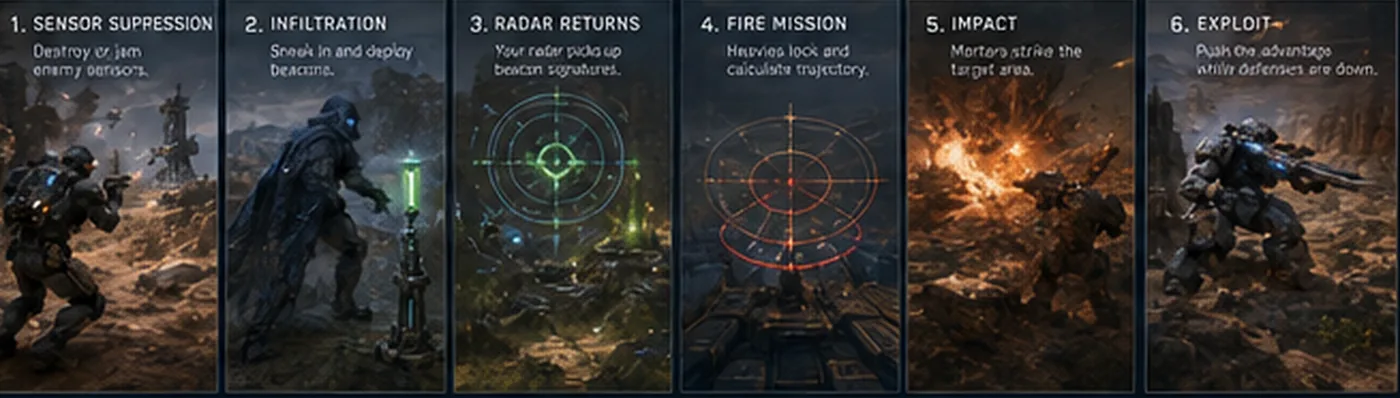
| Stage | Attacking team | Defending team's counter |
|---|---|---|
| 1Blind the grid | Disrupt, destroy or jam enemy sensor coverage. | Protect sensors, run patrols, keep redundant sensor nodes. |
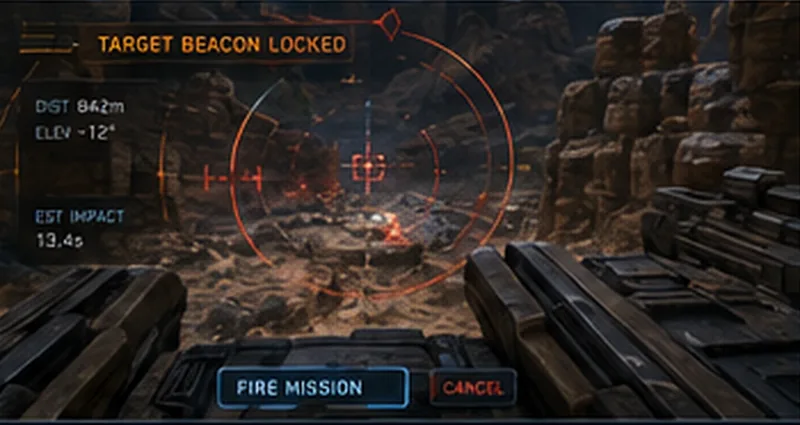
| 2Insert marker | A Strider (later a Specter) infiltrates and places a covert Target Beacon. | Sweeps, motion sensors, engineers, anti-cloak pulses. |
| 3Maintain own network | Keep your command radar or relay online. | Raid the enemy's sensor and command infrastructure. |
| 4Generate aim solution | Bulwarks see the sky and trajectory marker for indirect fire. | Jam the beacon, repair sensors, deploy a shield canopy, move assets. |
| 5Execute fire mission | Heavies lob arcing mortars onto the marked area. | Counter-battery fire, intercept rounds, kill the mortars, rotate base defence. |
| 6Exploit damage | Runners or vehicles attack during the damage and repair chaos. | Emergency repair, reserve defenders, relocate the Core, fall-back positions. |
Reconnaissance enables targeting; targeting enables heavy fire; heavy fire enables objective movement; objective movement forces a response; the response creates the next opportunity. Every step is readable after the fact, so a team understands why it lost.
Sensors, beacons, jamming, communications, the power grid, the repair economy and supply. Each is a place the enemy can cut the chain, and each needs a different role to hold it. Base modules: Core Station, Sensor Array, Radar Dome, Shield Generator, Vehicle Fabricator, Power Node.

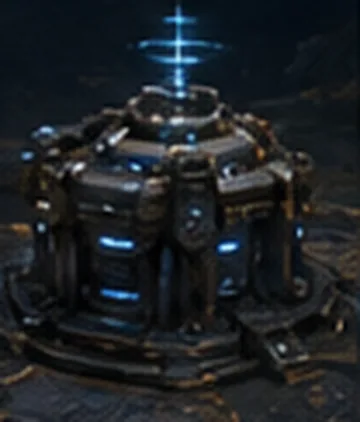
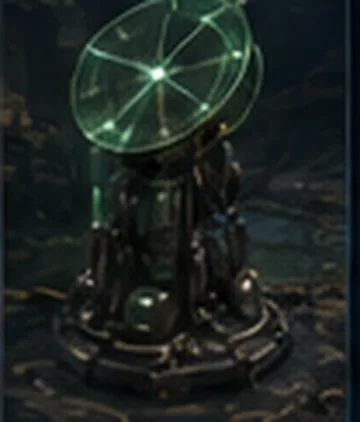
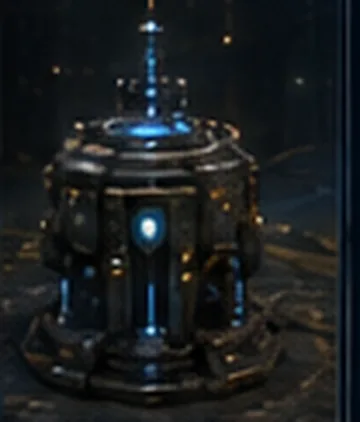
ConceptBase modules, as drawn on the boards